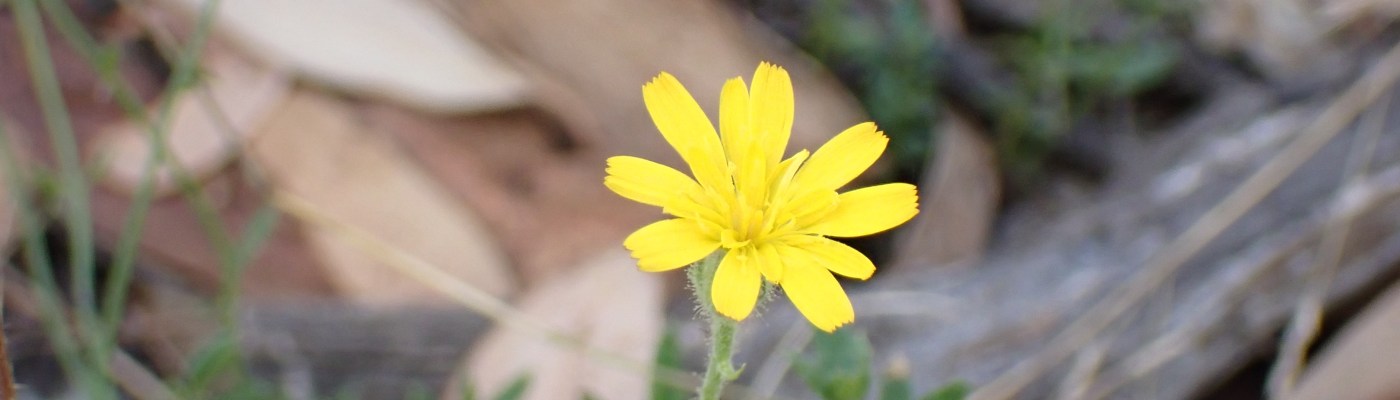
Marietta McGregor is a Canberra-based poet who has received awards for her haiku, haiga and haibun. Her haibun credits include winning both the UHTS Samurai Haibun Contest and the British Haibun Award.
As a retired botanist and science writer, Marietta writes knowledgably about plants, animals and the natural environment. Being a keen photographer, her writing also demonstrates an eye for detail and close description. Here is an extract from Marietta’s haibun titled Spring Thaw which first appeared in Contemporary Haibun Online:
For hours the woman lies on her belly, the cold press-back of earth unnoticed, recording details of lives stranger than her own. Through the camera’s viewfinder, two orange splotches like spilled acrylic paint creep slowly along the sassafras log. At last, they coalesce. She likes to imagine their joy at finding each other, two unlikely lovers in a vast rainforest.
Haibun, as a genre, is a combination of prose and haiku. However, the length of the prose and the number of haiku can vary greatly from one piece to another. As Marietta says, ‘My own preference when reading haibun is a narrative – I like to go where a story leads me and be surprised’. As a result, Marietta’s haibun often spend time creating vivid scenes and characters that draw the reader into the tale. Here, for example, is Marietta’s lovely haibun titled the The Visitant (reproduced in full):
The Visitant
We never found out where she came from, our hen. One morning she was just there, in the back yard. That was one of the times when only two of us, Mum and I, lived in that house. One of the times when Dad had gone off, we didn’t know where, driven by demons we couldn’t imagine. It happened at unpredictable moments. Something would set him off, he’d start drinking, and he’d disappear. We had the house to ourselves. Life settled down a bit. I’d go off to my Seventh Day Adventist Primary school each day and hurry home, glad to have Mum to myself.
And then someone else came to live with us, this plump, glossy Black Orpington, gentle and sweet-natured. She loved a cuddle, and would sit on my knee, crooning soft warm chicken songs for hours while I stroked and settled her feathers and babied her as my special doll. She had a whole repertoire of contented burbles and trills. Sitting with her warm bulk on my knee I felt happy, protected. I wondered who she was, really.
I found out much later that chickens make about 30 different sounds. We’d do well to learn their language. I tried murmuring her talk back to her, which she seemed to like, arching her neck under my hand, fluffing and resettling herself. I don’t remember how long she stayed with us, I only remember the pleasure of having her there. One day she wasn’t. There were no signs of pain or mayhem—no foxes in Tasmania in those days. We thought she must have moved on to warble to another family.
My father came home later that year. He’d been in a War Repatriation Hospital for some time, and looked ill and tired, the emphysema beginning to cave in his chest. We never saw the chicken again.
a handful of mash
the ache for something
different
It goes without saying that, to produce a good haibun, a writer needs to be able to write engaging prose and thoughtful haiku. But perhaps the most difficult aspect of writing a haibun is to use the haiku in a way that expands the reader’s experience of the prose. In this case, the haiku might be referring simply to the chicken’s desire to move on. Though the reader’s thoughts might also go to the young girl, her mother or her father, each of whom could be wishing for change in their lives. Indeed, the haiku reminds us that every one of us is likely to experience moments when we might ‘ache for something different’. Marietta’s masterful combination of prose and haiku subtly encourages the reader to contemplate much more than is evident at first glance.
The Visitant was written as an ekphrastic response to a painting titled Chickens! by Marion Clarke. The haibun was the Editor’s Choice winner of the March 2018 Ekphrastic Challenge run by the online journal, Rattle. You can view the painting, the haibun and the Editor’s comments here.
If you would like to read more haibun then you might like to follow this link to the long-running journal, Contemporary Haibun Online.

Jennifer Hambrick: Joyride
Jennifer Hambrick is an award-winning poet, public radio broadcaster, multimedia producer and classical musician who lives in Ohio, USA. Jennifer’s haibun collection, Joyride, was published by Red Moon Press in 2021. Joyride was Shortlisted for The Haiku Foundation’s 2021 Touchstone Distinguished Books Award and won First Place in Haiku Canada’s 2022 Marianne Bluger Book Award.…

 Gregory Piko